-
Evaluation for an Equitable Society
Stewart I. Donaldson and Robert Picciotto
Governments and organizations of all shapes and sizes espouse values of equity and social justice. Yet, there are many examples of unfair social arrangements and employment conditions, dysfunctional government practices, and growing income inequality in both developed and developing countries worldwide. The profession and transdiscipline of evaluation is well equipped to address issues of inequality and social injustice, but until recently has been much more focused on primary stakeholder and donor satisfaction (being as useful as possible to funders of interventions and evaluations) and accountability concerns. The authors in this volume challenge the field of evaluation to become more concerned about using evaluation to develop more equitable organizations, governments, and societies. Leading evaluation theorists and practitioners including Michael Scriven, Jennifer Greene, Thomas Schwandt, Emily Gates, Sandra Mathison, Karen Kirkhart, Saville Kushner, Lois-Ellin Datta, Ernest House, Robert Stake, Patricia Rogers, Robert Picciotto and Stewart Donaldson, provide a range of visions for how evaluation can play a much larger role in facilitating social justice across the globe. Evaluation for an Equitable Society will be of great interest to evaluation practitioners, students and scholars. It will be of interest to those teaching and taking introductory evaluation courses, as well as advanced courses focused on improving evaluation theory and practice.
-

Terrorist and Insurgent Unmanned Aerial Vehicles: Use, Potentials, and Military Implications
Robert J. Bunker
This manuscript focuses on the present threat posed by terrorist and insurgent use of unmanned aerial vehicles (UAVs) as well as associated future threat potentials. This work presents a counterintuitive analysis in the sense that armed drones are typically viewed as a component of America’s conventional warfighting prowess—not a technology that would be used against U.S. troops deployed overseas or against civilians back home. The emerging threat of such UAV use against the United States is investigated, and the unique analysis and creative approach related to the threat scenario variants generated are very informative. Hopefully, the larger implications posed by this analysis related to semi-autonomous and autonomous UAV type robotic systems will be of benefit.
-
Credible and Actionable Evidence: The Foundation of Rigorous and Influential Evaluations
Stewart I. Donaldson, Christina A. Christie, and Melvin M. Mark
Addressing one of the most important and contentious issues challenging applied research and evaluation practice today—what constitutes credible and actionable evidence?—this volume offers a balanced and current context in which to analyze the long-debated quantitative-qualitative paradigms. In the Second Edition, the contributors, a veritable “who’s who” in evaluation, discuss the diversity and changing nature of credible and actionable evidence; offer authoritative guidance about using credible and actionable evidence; explain how to use it to provide rigorous and influential evaluations; and include lessons from their own applied research and evaluation to suggest ways to address the key issues and challenges. Reflecting the latest developments in the field and covering both experimental and non-experimental methods, the new edition includes revised and updated chapters, summaries of strengths and weaknesses across varied approaches, and contains diverse definitions of evidence. Also included are two new chapters on assessing credibility and synthesizing evidence for policy makers. This is a valuable resource for students and others interested in how to best study and evaluate programs, policies, organizations, and other initiatives designed to improve aspects of the human condition and societal well-being.
-
Narco-Submarines: Specially Fabricated Vessels Used for Drug Smuggling Purposes
Byron Ramirez and Robert J. Bunker
This work is intended to be an initial primer on the subject of narco-submarines, that is, those specially fabricated vessels utilized principally by Colombian narco traffickers and developed to smuggle cocaine into the United States illicit drug market.
-

Global Criminal and Sovereign Free Economies and the Demise of the Western Democracies
Robert J. Bunker and Pamela Ligouri Bunker
Much has been written about the many economic benefits of globalization and the triumph and spread of democratic liberalism with the end of the Cold War, following the demise of the Soviet Union. This work takes issue with such ‘wine and roses’ perspectives about the future of the Western democracies and their faith-based views on the moral purity of a globalized marketplace. It also questions many of the assumptions found in the status quo reinforcing discipline of international political economy (IPE)—a discipline that focuses on the formal and legitimate economies and the façade they present that international relations and commerce is still dominated and dictated solely by the old Westphalian state centric system. Having highlighted these concerns, this book looks at two major themes. The first theme focuses on the theoretical perception that a ‘Dark Renaissance’ is taking place globally—one in which the Western liberal democracies and its citizens are ill prepared to respond because it exists at the trans-civilization level, bridging the modern to the post-modern world. The second theme focuses on the actual process of state deconstruction that is taking place. This process is leading to what may become the very undoing of the democracies. Drawing together experts from a variety of backgrounds, this work explores the increasing shift away from formal based capitalism and evaluates through case studies how different states are responding to the challenges they face. This work will be of great interest to students and scholars of international political economy.
-

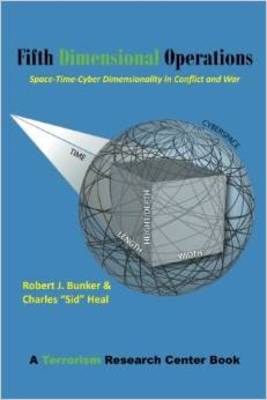
Fifth Dimensional Operations: Space-Time-Cyber Dimensionality in Conflict and War
Robert J. Bunker and Charles Heal
The work provides insights and constructs related to fifth dimensional military, law enforcement, and OPFOR (opposing force) operations derived from space (x,y,z), time (t), and cyber (c) dimensionality. Multiple contributors were involved in this Terrorism Research Center book project that contains essays dating from 1996 through 2014.
-

Crime Wars and Narco Terrorism in the Americas
Robert J. Bunker and John L. Sullivan
This work marks the 3rd Small Wars Journal-El Centro anthology. Its analyses, crafted by over thirty contributing authors, forms a compilation of the violence and corruption in Mexico plaguing the first year of Enrique Peña Nieto's presidency. Instances of spillover violence in the United States and the gang and cartel crime wars in other Latin American countries are also chronicled. Spanish language article appendices are additionally incorporated in this important anthology.
-
Why Marketing To Women Doesn’t Work
Jenny Darroch
"At some time in the future the recession will end. But what will happen then? How will customers respond to organizations that mistreated them in the past? What can organizations do now? Marketing Through Turbulent Times addresses these questions by tying together four themes: democracy, economic recession, individual depression and customer-centred strategies. Written for decision makers who want to ensure that their marketing strategies are not only relevant for today's difficult environment but will also provide a solid foundation for future growth, this book is an invaluable resource for anyone making strategic marketing decisions. Marketing Through Turbulent Times is a common sense, accessible book about marketing that provides a range of tools, principles and approaches for managers wanting to fine tune their current marketing strategies today and identify innovative growth opportunities which will allow them to lead their organization toward a robust future"-Provided by publisher.
-

Exploring Distance in Leader-Follower Relationships : When Near is Far and Far is Near
Michelle C. Bligh and Ronald Riggio
Leaders face new challenges as they cope with changes in culture, technology and the workplace. In this edited volume, based on a conference at Claremont, scholars of leadership studies from three continents discuss the latest psychological research on interpersonal leader–follower relations. The book tackles the impact of distance – physical, interpersonal and social – on our organizations, governments and societies.
-

Mexican Cartel Essays and Notes: Strategic, Operational, and Tactical: A Small Wars Journal-El Centro Anthology
Robert J. Bunker
This second Small Wars Journal-El Centro anthology signifies the important debate that this new forum, focusing on the crime wars and criminal insurgencies taking place in Mexico and other regions of the Americas, is helping to generate in U.S. defense and homeland security circles. The debate comes at a time when neither of the two major U.S. presidential candidates were willingly to candidly discuss this issue and at the end of the recent Felipe Calderón administration which saw over 80,000 dead, 20,000 missing, and 200,000 internal refugees stemming from gang and cartel violence during its tenure in Mexico.
-

Body Cavity Bombers: The New Martyrs: A Terrorism Research Center Book
Robert J. Bunker and Christopher Flaherty
Prologue
For those of us who must address future terrorist threats, we must reconcile the unthinkable with the possible. In so doing, we must also not create an environment conducive to use by terrorists in creating a climate of fear. Robert Bunker and Christopher Flaherty in their Body Cavity Bombers: The New Martyrs have met these challenges by presenting a threat that has been murderously enhanced since “mules” secreted drugs in their bodies to escape detection by customs and police. Terrorists now have the capability to surgically implant explosives in body cavities thus becoming a new type of suicide bomber. Those in the front line of identifying and taking necessary action to counter these new techniques of destruction would be well advised to read Dr. Bunker and Dr. Flahertys’ realistic assessment.
Dr. Stephen Sloan
Professor Emeritus
University of Oklahoma -

Studies in Gangs and Cartels
Robert J. Bunker and John P. Sullivan
Concerns over the changing nature of gangs and cartels and their relationships to states in the late 20th and early 21st centuries has resulted in the emergence of a scholarly body of work focused on their national security threat potentials. This body of work, utilizing the third generation gangs and third phase cartel typologies, represents an alternative to traditional gang and organized crime research and one that is increasingly influencing the US defense community. Rather than being viewed only as misguided youth and opportunistic criminals or, in their mature forms, as criminal organizations with no broader social or political agendas, more evolved gangs and cartels, are instead seen as developing political, mercenary, and state-challenging capacities. This evolutionary process has emerged due to the growing illicit economy and other unintended consequences of globalization.
-
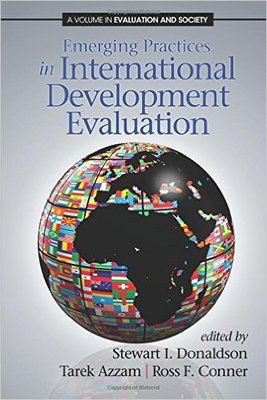
Emerging Practices in International Development Evaluation
Stewart I. Donaldson, Tarek Azzam, and Ross F. Conner
The impetus for this volume comes from reflecting on many years of experience, successes and failures in development evaluation in Asia and Africa, and from recent work supported by the Rockefeller Foundation on Rethinking, Reshaping, and Reforming Evaluation. The concepts, frameworks and ideas presented in this volume are a useful contribution to the ongoing efforts at rethinking, reforming and reshaping international development evaluation. They come from leading thinkers and practitioners in development, evaluation, research and academia who have recognized that development evaluation must evolve if it is to respond to the challenges of the 21st Century and play a meaningful role in social and economic transformation. This volume will be of great interest to evaluation scholars, practitioners, and students, particularly to those interested in international development projects, programs, and policies. This book will be appropriate for a wide range of courses, included Introduction to Evaluation, International Development Evaluation, Program Evaluation, Policy Evaluation, and evaluation courses in International Development, International Relations, Public Policy, Public Health, Human Services, Sociology, and Psychology.
-

The Future of Evaluation in Society: A Tribute to Michael Scriven
Stewart I. Donaldson and Michael Scriven
The impetus for this volume lives in a rich and vibrant past. It is organized to honor one of the founders and most prolific contributors to the profession and transdiscipline of evaluation -- Professor Michael Scriven, and to illuminate the future of evaluation in society. Professor Scriven often shares stories of his meetings with Albert Einsten and the frame-breaking evaluation revolution he has led against the value free doctrine of the social sciences. Both his wide eyed graduate students and the more grizzled evaluation veterans in his professional development workshops quickly learn that Scriven is well traveled and has exchanged some of the boldest ideas and visions with the most brilliant thinkers of his time. Scriven insisted that the 2011 Stauffer Symposium and this volume be organized in that genre. He urged us to invite the most thoughtful and influential evaluation theorists and practitioners we could find to join him in a conversation about the future of evaluation in society. Scriven challenges us to examine the five great paradigm shifts that have revolutionized the foundations of evaluation, and that he believes will form the basis for a much brighter future for evaluation in society. Scriven's revolutionary ideas are followed and challenged by a group of thought leaders in evaluation who do not necessarily shared his views on evaluation, but who have earned his deepest respect and whose evaluation work he admires including Michael Quinn Patton, Ernest House, Daniel Stufflebeam, Robert Stake, Jennifer Greene, Karen Kirkhart, Melvin Mark, Rodney Hopson, and Christina Christie. However, despite his insistence that his colleagues stay focused on the future of evaluation, you will find that many have recounted their adventures, exchanges, and debates with him over the years, as well as pointed out the many contributions that he has made to the development of evaluation and to the improvement of society through his amazing portfolio of evaluation contributions. The Future of Evaluation in Society: A Tribute to Michael Scriven will be of great interest to evaluation scholars, practitioners, and students of evaluation. It will be appropriate for use in a wide range of evaluation courses including Introduction to Evaluation, Evaluation Theory, and Evaluation Practice courses.
-

Share, Don’t Take The Lead
Craig L. Pearce, Henry P. Sims, and Charles C. Manz
Share, Don't Take the Lead is a book that offers an alternative perspective on leadership. The philosophy of shared leadership is straightforward: Leadership does not derive solely from position, authority, or hierarchy. Instead, leadership is something that can be executed by anyone who has the best knowledge or skill to undertake the leadership necessary in any given situation. Shared leadership is especially relevant, for example, in empowered teams where shared leadership can be initiated from any team member at any time, depending on the needs of the moment and the capabilities of the individuals. But the notion of shared leadership is also appropriate in a larger context. For example, an individual lower in the hierarchy can provide leadership if that person is best qualified to exercise it. Shared leadership also shows how hierarchical leaders with formal authority can use empowerment to develop leadership in others. This book tells the tales of how multiple trail blazing organizations used shared leadership to build high performance. The notion of shared leadership seems to contradict many of the bedrock ideas of efficient management and effective organizations. A typical first reaction is, “It'll never work here!” Yet, the organizations that “get it” and implement this new powerful approach tend to be more innovative and to out-perform their “nay-sayer” competitors. In fact, shared leadership is one of the most important ideas to hit business in recent years—our recent feature article about shared leadership in the Wall Street Journal is testimony to that. Shared leadership can provide a way for companies to increase productivity, quality, and flexibility while meeting the competitiveness challenge. Share the Lead provides new insights and information about how to push the organizational envelope to new frontiers.
-
Teaching Psychology Online: Tips and Techniques for Success
Stewart I. Donaldson and Kelly S. Neff
Intended as a resource for psychology educators ranging from teaching assistants to experienced faculty, this book shows readers how to effectively create and manage an online psychology course. Guidelines for preparing courses, facilitating communication, and assigning grades are provided along with activities and assessments geared specifically towards psychology. Pedagogical theories and research are fused with the authors’ teaching experiences to help maximize the reader’s abilities as an online psychology instructor. The book focuses on psychology education at the undergraduate level but it also includes material appropriate for graduate students and professionals. Readers will find helpful examples from all the major content areas including introductory, social, developmental, biological, abnormal, and positive psychology, and human sexuality
-

Mexico's Criminal Insurgency: A Small Wars Journal-El Centro Anthology
John P. Sullivan and Robert J. Bunker
In sum, this anthology represents some of the best and brightest scholars of today who are writing on the evolving security environment in Mexico and the implications this may hold for the United States. They have greatly enhanced our understanding of crime wars and criminal insurgencies-21st century war and conflict waged by non-state entities- and the impact this new form of warfare is having on states. For this, we embrace them and have established the new SWJ El Centro forum to further promote their professionalism and scholarship.
-

Advancing Validity in Outcome Evaluation : Theory and Practice
Stewart I. Donaldson, Huey-tsyh Chen, and Melvin M. Mark
Exploring the influence and application of Campbellian validity typology in the theory and practice of outcome evaluation, this volume addresses the strengths and weaknesses of this often controversial evaluation method and presents new perspectives for its use. Editors Huey T. Chen, Stewart I. Donaldson and Melvin M. Mark provide a historical overview of the Campbellian typology adoption, contributions and criticism. Contributing authors propose strategies in developing a new perspective of validity typology for advancing validity in program evaluation including Enhance External Validity Enhance Precision by Reclassifying the Campbellian Typology Expand the Scope of the Typology The volume concludes with William R. Shadish's spirited rebuttal to earlier chapters. A collaborator with Don Campbell, Shadish provides a balance to the perspective of the issue with a clarification and defense of Campbell's work. This is the 129th volume of the Jossey-Bass quarterly report series New Directions for Evaluation, an official publication of the American Evaluation Association.
-

Applied Positive Psychology: Improving Everyday Life, Health, Schools, Work, and Society
Stewart I. Donaldson, Mihaly Csikszentmihalyi, and Jeanne Nakamura
Positive Psychology has experienced extraordinary growth over the past decade. Emerging research in this area is suggesting new strategies for improving everyday life, healthcare, education systems, organizations and work life, and societies across the globe. This book will be of interest to all applied psychologists, applied researchers, social and organizational psychologists, and anyone interested in applying the science of positive psychology to improvement of the human condition.
-
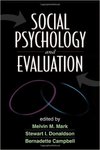
Social Psychology and Evaluation
Stewart I. Donaldson, Melvin M. Mark, and Bernadette Campbell
This compelling work brings together leading social psychologists and evaluators to explore the intersection of these two fields and how their theory, practices, and research findings can enhance each other. An ideal professional reference or student text, the book examines how social psychological knowledge can serve as the basis for theory-driven evaluation; facilitate more effective partnerships with stakeholders and policymakers; and help evaluators ask more effective questions about behavior. Also identified are ways in which real-world evaluation findings can identify gaps in social psychological theory and test and improve the validity of social psychological findings--for example, in the areas of cooperation, competition, and intergroup relations. The volume includes a useful glossary of both fields' terms and offers practical suggestions for fostering cross-fertilization in research, graduate training, and employment opportunities. Each chapter features introductory and concluding comments from the editors.
-
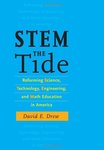
STEM the Tide: Reforming Science, Technology, Engineering, and Math Education in America
David E. Drew
One study after another shows American students ranking behind their international counterparts in the STEM fields—science, technology, engineering, and math. Businesspeople such as Bill Gates warn that this alarming situation puts the United States at a serious disadvantage in the high-tech global marketplace of the twenty-first century, and President Obama places improvement in these areas at the center of his educational reform. What can be done to reverse this poor performance and to unleash America’s wasted talent?
David E. Drew has good news—and the tools America needs to keep competitive. Drawing on both academic literature and his own rich experience, Drew identifies proven strategies for reforming America’s schools, colleges, and universities, and his comprehensive review of STEM education in the United States offers a positive blueprint for the future. These research-based strategies include creative and successful methods for building strong programs in science and mathematics education and show how the achievement gap between majority and minority students can be closed. A crucial measure, he argues, is recruiting, educating, supporting, and respecting America’s teachers.
To secure a competitive advantage both in the knowledge economy and in economic development more broadly, America needs a highly skilled, college-educated workforce and cutting-edge university research. Drew makes the case that reforming science, technology, engineering, and mathematics education to meet these demands, with an emphasis on reaching historically underserved students, is essential to the long-term prosperity of the United States.
Accessible, engaging, and hard hitting, STEM the Tide is a clarion call to policymakers, administrators, educators, and everyone else concerned about students’ participation in the STEM fields and America’s competitive global position.
-

Designing User Studies in Informatics
Gondy Leroy
Computer software is becoming increasingly pervasive in all aspects of everyday life and frequently plays a decisive factor in people’s decisions. User studies of such software and its components will provide developers with essential data for improving designs and products while allowing causal conclusion to be drawn about effectiveness and usefulness.
Designing User Studies in Informatics is intended as a practical guide for academics and business professionals wanting to evaluate user interactions with software. It provides a succinct overview of the theoretical background and includes the user study designs most suited for evaluating software and its components combined with a practical, hands-on approach to executing them. While applicable to all domains, the book concentrates on examples taken primarily from medicine and healthcare.
-
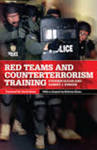
Red Teams and Counterterrorism Training (International and Security Affairs Series)
Stephen Sloan and Robert J. Bunker
Using red teams in today's counterterrorism training
Keeping ahead of terrorists requires innovative, up-to-date training. This follow-up to Stephen Sloan s pioneering 1981 book, Simulating Terrorism, takes stock of twenty-first-century terrorism then equips readers to effectively counter it. Quickly canvassing the evolution of terrorism and of counterterrorism efforts over the past thirty years, co-authors Sloan and Robert J. Bunker draw on examples from the early 2000s, following the World Trade Center and Pentagon attacks, to emphasize the need to prevent or respond quickly to " active aggressors " terrorists who announce their presence and seek credibility through killing. Training for such situations requires realistic simulations whose effectiveness, the authors show, depends on incorporating red teams; that is, the groups that play the part of active aggressors.
In Red Teams and Counterterrorism Training, Sloan and Bunker, developers of simulation-driven counterterrorist training, take readers through the prerequisites for and basic principles of conducting a successful simulation and preparing responders to face threats whether from teenage shooters or from sophisticated terrorist organizations. The authors clearly explain how to create an effective red team whose members can operate from within the terrorists mindset. An innovative chapter by theater professional Roberta Sloan demonstrates how to use dramatic techniques to teach red teams believable role-playing.
Rounding out this book, a case study of the 2009 shooting at Fort Hood illustrates the cost of failures in intelligence and underscores the still-current need for serious attention to potential threats. First responders whether civilian or military will find Red Teams and Counterterrorism Training indispensible as they address and deter terrorism now and in the future.
-

Marketing Through Turbulent Times
Jenny Darroch
"At some time in the future the recession will end. But what will happen then? How will customers respond to organizations that mistreated them in the past? What can organizations do now? Marketing Through Turbulent Times addresses these questions by tying together four themes: democracy, economic recession, individual depression and customer-centred strategies. Written for decision makers who want to ensure that their marketing strategies are not only relevant for today's difficult environment but will also provide a solid foundation for future growth, this book is an invaluable resource for anyone making strategic marketing decisions. Marketing Through Turbulent Times is a common sense, accessible book about marketing that provides a range of tools, principles and approaches for managers wanting to fine tune their current marketing strategies today and identify innovative growth opportunities which will allow them to lead their organization toward a robust future"--Provided by publisher.
-
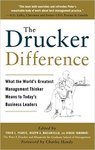
The Drucker Difference
Craig L. Pearce, Joseph A. Maciariello, and Hideki Yamawaki
Presents the business management teachings of Peter Drucker with new assessments regarding current trends, providing readers with new insights and timely interpretations of his work.
Printing is not supported at the primary Gallery Thumbnail page. Please first navigate to a specific Image before printing.