-
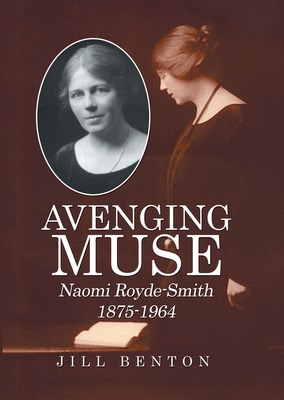
Avenging Muse: Naomi Royde-Smith, 1875-1964
Jill Benton
Avenging Muse is the biography of Naomi Royde-Smith, a powerful early twentieth-century British literary editor who discovered and published the first works of such writers as Rupert Brooke, Rose Macaulay, and Graham Greene. Beginning at age 50, she became in her own right a prolific author of more than thirty novels in addition to plays, biographies, and cultural critiques posing as travelogues. She writes about fin de siècle Geneva, about London and working women between the wars, about journalism and theater, about artists and their promoters, about banal culture, about social class in disarray, about a world that lacks spiritual center. Bravely Royde-Smith also writes about the lives of women loving women, men loving men, and tales about ordinary men and women in love-or not. The historical environment surrounding her writing, as well as those about whom she wrote, was morally and legally hostile to exploration of sexualities. Her fictions, witty and empathetic, emerge from her own experiences. Royde-Smith enjoyed her work as a professional muse-literary editor in London of the prestigious Saturday Westminster Gazette and then the Queen; however, she did not enjoy being cast by writers, such as Walter de la Mare and Henry Spiess, as their personal muse. Indeed, in certain of her novels, she retaliated against men who trespass, attacking their self-absorbed use of women in the name of art. Her personal story corresponds with an increasing historical realization of women's rights, a realization that undermines romantic and neoromantic reverence for conventional muses. Her writings anticipate current literary and feminist theories of performative gender.
-
The Developing Genome: An Introduction to Behavioral Epigenetics
David S. Moore
Why do we grow up to look, act, and feel as we do? Through most of the 20th century, scientists and laypeople answered this question by referring to two factors alone: our experiences and our genes. But recent discoveries about how genes work have revealed a new way to understand the developmental origins of our characteristics. These discoveries have emerged from the new science of behavioral epigenetics—and just as the whole world has now heard of DNA, "epigenetics" will be a household word in the near future.
In spite of how important this research is, behavioral epigenetics is still relatively unknown to non-biologists. The Developing Genome is an introduction to this exciting new discipline; it will allow readers without a background in biology to learn about this work and its revolutionary implications.
-

Technology and Commercial Air Travel
Rudi Volti
Rudi Volti explores the economical, political, cultural, and social events that propelled the technological advances of the airline industry. From more advanced airplanes to better security and safety, Volti also presents how the contributions of air travel have shaped the world that we live in today.
-
Making Sense of Public Opinion: American Discourses about Immigration and Social Programs
Claudia Strauss
Questions about immigration and social welfare programs raise the central issues of who belongs to a society and what its members deserve. Yet the opinions of the American public about these important issues seem contradictory and confused. Claudia Strauss explains why: public opinion on these issues and many others is formed not from liberal or conservative ideologies but from diverse vernacular discourses that may not fit standard ideologies but are easy to remember and repeat. Drawing on interviews with people from various backgrounds, Strauss identifies and describes 59 conventional discourses about immigration and social welfare and demonstrates how we acquire conventional discourses from our opinion communities. Making Sense of Public Opinion: American Discourses about Immigration and Social Programs explains what conventional discourses are, how to study them, and why they are fundamental elements of public opinion and political culture.
-
An Introduction to the Sociology of Work and Occupations
Rudi Volti
The Sociology of Work and Occupations connects work and occupations to the key subjects of sociological inquiry: social and technological change, race, ethnicity, gender, social class, education, social networks, and modes of organization. In 15 chapters, Rudi Volti succinctly but comprehensively covers the changes in the world of work, encompassing everything from gathering and hunting to working in today's Information Age. This book introduces students to a highly relevant analysis of society today. In this new and updated edition, globalization and technology are each given their own chapter and discussed in great depth.
-
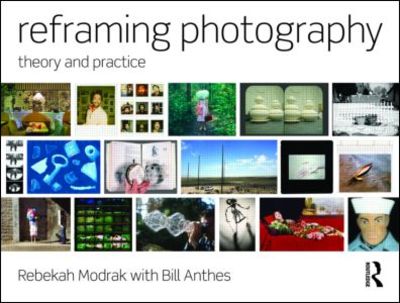
Reframing Photography: Theory and Practice
Bill Anthes and Rebekah Modrak
To fully understand photography, it is essential to study both the theoretical and the technical.
In an accessible yet complex way, Rebekah Modrak and Bill Anthes explore photographic theory, history and technique to bring photographic education up-to-date with contemporary photographic practice. Reframing Photography is a broad and inclusive rethinking of photography that will inspire students to think about the medium across time periods, across traditional themes, and through varied materials. Intended for both beginners and advanced students, and for art and non-art majors, and practicing artists, Reframing Photography compellingly represents four concerns common to all photographic practice:
vision
light/shadow
reproductive processes
editing/ presentation/ evaluation.Each part includes an extensive and thoughtful essay, providing a broad cultural context for each topic, alongside discussion of photographic examples. Essays introduce the work of artists who use a diverse range of subject matter and a variety of processes (straight photography, social documentary, digital, mixed media, conceptual work, etc.), examine artists' conceptual and technical choices, describe cultural implications and artistic influences, and analyze how these concerns interrelate. Following each essay, each part continues with a "how-to" section that describes a fascinating range of related photographic equipment, materials and methods through concise explanations and clear diagrams.
-

Learning from YouTube
Alexandra Juhasz and Craig Dietrich
"YouTube is a mess. YouTube is for amateurs. YouTube dissolves the real. YouTube is host to inconceivable combos. YouTube is best for corporate-made community. YouTube is badly baked. These are a few of the things Media Studies professor Alexandra Juhasz (and her class) learned about YouTube when she set out to investigate what actually happens within new media settings that proclaim to be radically "democratized."
-
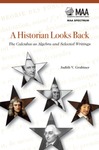
A Historian Looks Back: The Calculus as Algebra and Selected Writings
Judith V. Grabiner
Judith Grabiner has written extensively on the history of mathematics. This collection, representing some of Grabiner's finest work, highlights the benefits of studying the development of mathematical ideas and the relationship between culture and mathematics. A large part of the book—Part I—is a welcome reprinting of Grabiner's “The Calculus as Algebra: J.-L. Lagrange, 1736–1813” (1990), which focuses on Lagrange's pioneering effort to reduce the calculus to algebra. Ten articles—Part II—span a range of other mathematical topics, including widely held myths about the history of mathematics and the work of such mathematicians as Descartes, Newton, and Maclaurin. Six of these articles won awards from the MAA for expository excellence.This collection is an inspiring resource for courses on the history of mathematics. It reveals the creativity that has produced the mathematics we see as the finished product in textbooks.
-

Interdisciplinarity and Social Justice
Joseph D. Parker, Ranu Samantrai, and Mary Romero
Considers the past, present, and future of interdisciplinary fields motivated by concerns for social justice. In the 1960s and 1970s, activists who focused on the academy as a key site for fostering social change began by querying the assumptions of the traditional disciplines and transforming their curricula, putting into place women’s and ethnic studies programs that changed both the subject and methods of scholarship. The pattern of scholars and activists joining forces to open fields of research and teaching continued in subsequent decades, and recent additions, including critical race studies, queer studies, cultural studies, and postcolonial studies, take as their epistemological foundation the inherently political nature of all knowledge production. Interdisciplinarity and Social Justice seizes this opportune moment in the history of interdisciplinary fields to review their effects on our intellectual and political landscape, to evaluate their ability to deliver promised social benefits, and to consider their futures. The essays collected in this volume examine how effectively interdisciplinary fields have achieved their goals of intellectual and social change, and consider the challenges they now face inside and outside the academy.
-

The Disordered Police State: German Cameralism as Science and Practice
Andre Wakefield
Probing the relationship between German political economy and everyday fiscal administration, The Disordered Police State focuses on the cameral sciences—a peculiarly German body of knowledge designed to train state officials—and in so doing offers a new vision of science and practice during the seventeenth and eighteenth-centuries. Andre Wakefield shows that the cameral sciences were at once natural, technological, and economic disciplines, but, more important, they also were strategic sciences, designed to procure patronage for their authors and good publicity for the German principalities in which they lived and worked. Cameralism, then, was the public face of the prince's most secret affairs; as such, it was an essentially dishonest enterprise. In an entertaining series of case studies on mining, textiles, forestry, and universities, Wakefield portrays cameralists in their own gritty terms. The result is a revolutionary new understanding about how the sciences created and maintained an image of the well-ordered police state in early modern Germany. In raising doubts about the status of these German sciences of the state, Wakefield ultimately questions many of our accepted narratives about science, culture, and society in early modern Europe.
-
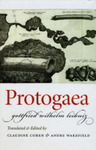
Protogaea
Gottfried Wilhelm Leibniz, Claudine Cohen, and Andre Wakefield
Protogaea, an ambitious account of terrestrial history, was central to the development of the earth sciences in the eighteenth century and provides key philosophical insights into the unity of Gottfried Wilhelm Leibniz’s thought and writings. In the book, Leibniz offers observations about the formation of the earth, the actions of fire and water, the genesis of rocks and minerals, the origins of salts and springs, the formation of fossils, and their identification as the remains of living organisms. Protogaea also includes a series of engraved plates depicting the remains of animals—in particular the famous reconstruction of a “fossil unicorn”—together with a cross section of the cave in which some fossil objects were discovered.
Though the works of Leibniz have been widely translated, Protogaea has languished in its original Latin for centuries. Now Claudine Cohen and Andre Wakefield offer the first English translation of this central text in natural philosophy and natural history. Written between 1691 and 1693, and first published after Leibniz’s death in 1749, Protogaea reemerges in this bilingual edition with an introduction that carefully situates the work within its historical context.
-
Society and Technological Change
Rudi Volti
Comprehensive in his discussion of both historical and contemporary technological advance, Volti never fails to explore the societal implications of each technology he presents. The new Sixth Edition has been fully updated to include recent technological innovation in such areas as genetics, communications, terrorism, and medicine. Further, updated photos throughout the book bring Volti's words to life.
-
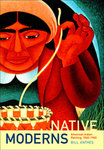
Native Moderns: American Indian Painting, 1940 - 1960
Bill Anthes
Between 1940 and 1960, many Native American artists made bold departures from what was considered the traditional style of Indian painting. They drew on European and other non-Native American aesthetic innovations to create hybrid works that complicated notions of identity, authenticity, and tradition. This richly illustrated volume focuses on the work of these pioneering Native artists, including Pueblo painters José Lente and Jimmy Byrnes, Ojibwe painters Patrick DesJarlait and George Morrison, Cheyenne painter Dick West, and Dakota painter Oscar Howe. Bill Anthes argues for recognizing the transformative work of these Native American artists as distinctly modern, and he explains how bringing Native American modernism to the foreground rewrites the broader canon of American modernism.
In the mid-twentieth century, Native artists began to produce work that reflected the accelerating integration of Indian communities into the national mainstream as well as, in many instances, their own experiences beyond Indian reservations as soldiers or students. During this period, a dynamic exchange among Native and non-Native collectors, artists, and writers emerged. Anthes describes the roles of several anthropologists in promoting modern Native art, the treatment of Native American “Primitivism” in the writing of the Jewish American critic and painter Barnett Newman, and the painter Yeffe Kimball’s brazen appropriation of a Native identity. While much attention has been paid to the inspiration Native American culture provided to non-Native modern artists, Anthes reveals a mutual cross-cultural exchange that enriched and transformed the art of both Natives and non-Natives.
-
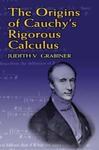
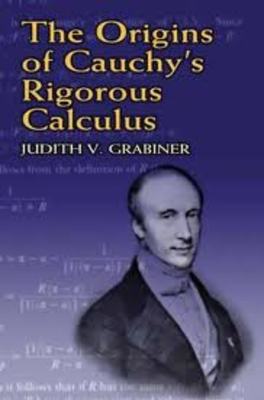
The Origins of Cauchy's Rigorous Calculus
Judith V. Grabiner
This book explores the background of a major intellectual revolution: the rigorous reinterpretation of the calculus undertaken by Augustin-Louis Cauchy and his contemporaries in the first part of the 19th century. Their generation changed the calculus from a method of solving problems to a collection of theorems, based on precise definitions, about limits, continuity, series, derivatives, and integrals. The book shows how Cauchy reshaped inherited 18th-century concepts to create an approach to rigor that we still accept today. In so doing, The Origins of Cauchy's Rigorous Calculus provides fresh insights and a new perspective on the foundations of analysis. After defining rigor and describing the characteristics of 19th-century thinking about analysis, the book examines 18th-century views of the calculus and the manifest lack of interest in the foundations of analysis. The greater part of the book concerns itself with tracing how specific achievements of 18th-century mathematics were transformed by Cauchy into the basis of his rigorous calculus (especially the development of the algebra of inequalities: ideas on limits, continuity, and convergence; and certain 18th-century treatments of the derivative and integral), with the work of Joseph-Louis Lagrange shown to be crucial in the transition to new ways of thinking.
-
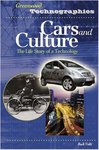
Cars and Culture: The Life Story of a Technology
Rudi Volti
Presents a history of the automobile, and discusses the political, economic, social, cultural, and technological forces that have shaped the development of automobiles and the automobile industry.
-

The Dependent Gene: The Fallacy of "Nature vs. Nurture"
David S. Moore
A much-needed antidote to genetic determinism, The Dependent Gene reveals how all traits-even characteristics like eye and hair color-are caused by complex interactions between genes and the environment at every stage of biological and psychological development, from the single fertilized egg to full-grown adulthood.
How we understand the nature versus nurture debate directly affects our thoughts about such basic issues as sex and reproduction, parenting, education, and crime, and has an enormous impact on social policy. With life-and-death questions in the balance surrounding stem-cell research, cloning, and DNA fingerprinting, we can no longer afford to be ignorant of human development. An enlightening guide to this brave new world, The Dependent Gene empowers us to take control of our own destiny.
-

Technology Transfer and East Asian Economic Transformation
Rudi Volti
Rudi Volti explores how the transfer of foreign technologies contributed to the rapid development of the East Asian economies of China, Japan, Taiwan, and Korea.
-
Zen Buddhist Landscape Arts of Early Muromachi Japan (1336-1573)
Joseph D. Parker
Examining inscriptions on landscape paintings and related documents, this book explores the views of the "two jewels" of Japanese Zen literature, Gido Shushin (1325-1388) and Zekkai Chushin (1336-1405), and their students. These monks played important roles as advisors to the shoguns Ashikaga Yoshimitsu (1358-1408) and Yoshimochi (1386-1428), as well as to major figures in various michi or Ways of linked verse, the No theatre, ink painting, rock gardens, and other arts. By applying images of mountain retreats to their busy urban lives in the capital, these Five Mountain Zen monks provoke reconsiderations of the relation between secular and sacred and nature and culture.
-
The Facts On File Encyclopedia of Science, Technology, and Society
Rudi Volti
This three-volume reference presents science and technology in the context of historical and social dimensions. It deals not only with theories, discoveries, artifacts, and systems that have stood the test of time, but also with those that have failed. The book features approximately 900 entries.
-
A Cognitive Theory of Cultural Meaning
Claudia Strauss and Naomi Quinn
"Culture" and "meaning" are central to anthropology, but anthropologists do not agree on what they are. Claudia Strauss and Naomi Quinn propose a new theory of cultural meaning, one that gives priority to the way people's experiences are internalized. Drawing on "connectionist" or "neural network" models as well as other psychological theories, they argue that cultural meanings are not fixed or limited to static groups, but neither are they constantly revised or contested. Their approach is illustrated by original research on understandings of marriage and ideas of success in the United States.
-
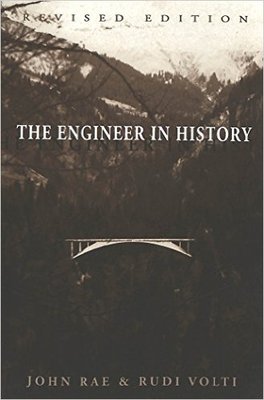
The Engineer in History
Rudi Volti and John B. Rae
Surveying more than two millennia, The Engineer in History presents the story of the designers and builders of aqueducts, cathedrals, clocks, machine tools, bridges, railroads, and airplanes. It examines their social origins, educations, working methods, relationships with employers, influences on management theory and practices, and many other topics. Throughout, the narrative focuses on particular engineers whose working lives exemplify the themes presented.
-
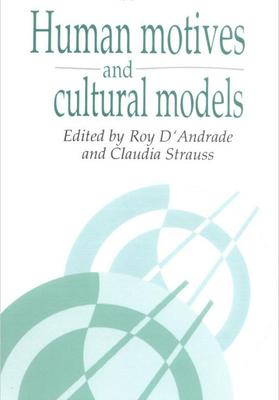
Human Motives and Cultural Models
Roy G. D'Andrade and Claudia Strauss
A full understanding of human action requires an understanding of what motivates people to do what they do. For too many years studies of motivation have drawn from different theoretical paradigms. Typically, human motivation has been modeled on animal behavior, while culture has been described as pure knowledge or symbol. The result has been insufficient appreciation of the role of culture in human motivation and a truncated view of culture as disembodied knowledge. The anthropologists in this volume have attempted a different approach, seeking to integrate knowledge, desire, and action into a single explanatory framework. This research builds on recent work in cognitive anthropology on cultural models.
-
The Calculus as Algebra: J. L. Lagrange, 1736-1813
Judith V. Grabiner
In The Calculus as Algebra: J.-L. Lagrange, 1736–1813, Grabiner shows what Lagrange’s mathematical practice was like, in order to understand the genesis of the rigorous analysis of Cauchy, Bolzano, and Weierstrass. For Lagrange, the calculus was not about rates of change or ratios of differentials, or even about limits as then understood. Lagrange thought that the calculus should be reduced to “the algebraic analysis of finite quantities.” This sounds as though he was about to introduce deltas and epsilons. But instead he believed that there was an algebra of infinite series, and that every function had a power-series expansion except perhaps at finitely many isolated points. Lagrange defined the derivative as the coefficient of the linear term in the function’s power-series expansion. Why he thought this was justified tells us both about his philosophy of mathematics and about the way many mathematicians practiced their subject in the eighteenth century.
-
Technology, Politics, and Society in China
Rudi Volti
Westview special studies on China and East Asia.
Printing is not supported at the primary Gallery Thumbnail page. Please first navigate to a specific Image before printing.